Archive

Posts Tagged ‘Banking’

JPM, Facebook, Gold … And The Potential of A Titanic Financial Market Event

May 22, 2012 Leave a comment

Bill Murphy | LeMetropoleCafe

“The way I see it, if you want the rainbow, you gotta put up with the rain.” … Dolly Parton

GO GATA!!!

The reason for this rare, extra commentary over a weekend is to focus on a couple of points which really stand out in their particular significance and are worth pondering in terms of what is coming down the road for financial markets.

The first is what we jumped all over on PLANET GATA from the get-go about the JP Morgan hedge trade flap gone wrong. It made NO sense from the very beginning to any of us that such a commotion was made over a $2 billion loss on a trade, for whatever reason, when they had just reported yearly gains of $18 billion. Clearly, Mr. Dimon’s public pronouncement, that caught the attention of the entire investment world, was only paving the way for future announcements that will be much more dramatic. All he was doing when he inferred the losses MIGHT get worse was protecting himself, as best he could, by going on the record.

The latest news on JPM…

14:31 JPM JP Morgan Chase struggling to unwind ill-placed bets – WSJ

While breaking no real news, this story notes that the bank’s losses could eventually prove to be even bigger than the $5B some people familiar with the matter have been predicting (see linked comment). The losses could potentially deepen if the company sells its positions into a market that has turned against said positions.
The article notes that while the bank has said that it will take its time unwinding the positions, this does not necessarily guarantee smaller final losses than trying to close out the trades sooner, as the market could turn sharply against the bank in the near term. 
Reference Link: Wall Street Journal 

14:50 JPM CFTC latest federal agency to begin investigating JPMorgan Chase – NYT DealBook

NYT Dealbook reports, citing people briefed on the matter, that the Commodity Futures Trading Commission opened an enforcement case on Friday examining the bank’s trading loss. The CFTC joins the SEC and FBI in investigating possible wrongdoing at the bank. Gary Gensler, the agency’s chairman, is expected to disclose the investigation when he testifies on Tuesday before the Senate Banking Committee.
Dealbook says that the CFTC will potentially examine whether the bank’s trading affected the market for credit derivatives, for which it has jurisdiction.
Reference Link: NY Times

This latest investigation into JP Morgan might be a big deal for the GATA camp. This is actually quite complicated, but very intriguing. The CFTC has been investigating JPM’s role in the silver market manipulation scheme for what will be four years soon. FOUR YEARS! Good friends, like Dave from Denver, have nothing but loathsome talk about the CFTC, for good reason. GATA’s rationale (speaking for myself) about this ridiculous investigation is that the CFTC really has uncovered the scam, but because it is backed by the US Government, they are flabbergasted about what to do, so they do nothing.

The reason they have not closed the case is because they are petrified the silver market might blow up down the road. Think about if you were them. They want this to go away, but if the silver market does blow up, and there is some kind of “Force Majeure” declared in silver by JPM, the CFTC would not only look like fools, but, perhaps it might be said they were more than negligent. Thus, they have done nothing.

Well, all of a sudden, Lo and Behold a new factor enters the silver scam investigation, which directly affects Morgan’s constant claims to the CFTC that their huge silver short position is hedged. Ya mean like hedged in an economic sense as per their claims re the latest credit derivatives market trade was a hedge? This just might force the CFTC to demand JP Morgan prove their claims their silver short position is really a hedged one. This is what I suspect might occur due to the growing scrutiny over Morgan’s trading activities. The CFTC people, except for Bart “Elliot Ness” Chilton, are sycophants and have toed the company line … but there is a point when FEAR makes that no longer viable. They are not going to go to jail for taking one for the team. My guess is we are getting close to that Tipping Point.

As the JP Morgan hedged losses mount and become “official,” the heat on them is going to mount. They will be scrutinized every way imaginable. How can all the class action lawsuits against them, and blatant evidence against them via just what Andrew Maquire has sent to the CFTC via their role in the silver scam, be ignored?

We have already been informed, as of a week ago, that the Morgan losses on their “hedge trade” fiasco could be as high as $15 billion, or more. Already, even the WSJ is alluding that their losses are higher than $5 billion. This is MEGA! As we have discussed on PLANET GATA, this is not just about Morgan, but confidence in the entire financial system. If the $70 trillion derivatives book at Morgan goes NUCLEAR, we could have a financial market TITANIC event which might be right around the corner.

GOOD GRIEF!

Now, for the weekend edition, number two re the understandable, but nauseating, commotion over the Facebook IPO on Friday, which was heralded by CNBC all week.

First, the background…

*The Dow is going down day after day, not with any fanfare, but all rallies are sold. In very quiet and subdued selling, general investors inherently know something is wrong and are acting upon that instinct.

*Europe is falling apart we know, but little is being said about how the US financial system is in parallel with Europe. How bad is this? Just the state of California budget deficit goes from something like $8 billion to a staggering $16 billion and it creates almost no commotion. Huh?

Getting back into the GATA aspect of this is that the US financial markets are all about market manipulation. You need to go nowhere further on what the real deal about US financial markets than this headline…

Banks spend big to prop up Facebook shares on first day of trading
By GARETT SLOANE and MARK DECAMBRE
Last Updated: 8:15 AM, May 19, 2012
Posted: 11:34 PM, May 18, 2012

It was another Wall Street bailout — but this time the banks had to cough up the cash. Facebook’s underwriters propped up the social-network’s trading debut yesterday, as the shares threatened to crash through the initial public offering price of $38. The banks working on the massive $16 billion IPO, including Morgan Stanley, JPMorgan Chase and Goldman Sachs, did their duty by buying up large blocks of Facebook stock toward the end of the day to support the price.

Facebook shares opened up 11 percent at $42.05, and traded as high as $45, before running out of steam, disappointing investors hoping for a big first-day pop. The shares closed up just 0.6 percent at $38.23.

Without the bank bailout, Facebook’s IPO would have been a loser on the day, Wall Street insiders said.

The heavy buying, however, cut into the banks’ already meager fees on the deal. The underwriters agreed to accept a smaller cut — just 1.1 percent of the $16 billion Facebook raised in the IPO — in order to land the high-profile assignment.

After splitting $176 million in fees, the firms likely spent more than they made in fees by buying the swooning stock. Sam Hamadeh, CEO of research firm Privco, believes the banks spent around $380 million on Facebook stock.

“On the heels of JPMorgan’s $2 billion ‘hedging’ trading loss, tThe underwriters have used up all the fees they made on the Facebook deal just to buy and prop up the stock to prevent a busted IPO,” said Hamadeh.

Another source said that the banks took a substantial hit yesterday, which started strong despite glitches that delayed Nasdaq trading in Facebook shares by 30 minutes past their 11 a.m. scheduled debut.

While there was plenty of finger-pointing yesterday, many blamed the bankers for setting the price too high to allow for upside. The IPO share priced at the high end of the $34 to $38 range, which had been raised from an initial range of $28 to $35.

The bankers were wary of pricing the shares too low, leaving money on the table and leading to an outrageous first-day pop. They were shooting for a modest first-day gain in the range of 5 percent to 10 percent.

Still, some observers heaped scorn on Facebook insiders who dumped their shares, saying it was a red flag that weighed on the stock.

Facebook had increased the number of shares being sold in the IPO by 25 percent, to 425 million, with most of the additional float coming from early investors looking to cash out.

The company’s sky-high valuation also made some investors queasy. At $38 a share, Facebook is valued at $104 billion — even though it only made $3.7 billion last year.

Facebook’s big day was a drag on other tech stocks. Trading in shares of Zynga was halted yesterday after a sharp drop, and the stock closed down 13.4 percent at $7.16. China’s social network RenRen was also down more than 20 percent, to $4.93.
gsloane@nypost.com

My take on this, from my Behavioral Finance background on how our financial system really operates, is the effort to hold up the Facebook IPO was an effort to hold up the stock market as a whole. For the BF folks, perception is everything. That is why they do what they do. The Counterparty Risk Management Policy Group (do a Google if new to you), led by the same firms that held up the Facebook share price, does not exist for no reason. One of their mandates is to promote market stability and that is what they just did. That Group works closed with the Plunge Protection Team (Working Group on Capital Markets) to support the US stock market at various times.

What we saw in the price rises of gold and silver at the end of the week was stunning and totally out of the natural order of the gold/silver price manipulation scheme. It was a wowser! My smeller tells me, because the dramatic rally was so pronounced, that we are headed for some serious fireworks in the financial arena.

The Gold Cartel could be in deep trouble now because their honcho, JP Morgan, is in deepening trouble. This is no minor event in terms of the gold/silver market manipulation scandal.

All hands on deck to prepare for the financial market commotion that seems to be right around the corner!

-

Related Articles:


The only viable solution is to get government out of the money business permanently

May 15, 2012 Leave a comment

Ron Paul

The Fed: Mend It or End It?

-
Last week I held a hearing to examine the various proposals that have been put forth both to mend and to end the Fed. The purpose was to spur a vigorous and long-lasting discussion about the Fed’s problems, hopefully leading to concrete actions to rein in the Fed.

First, it is important to understand the Federal Reserve System. Some people claim it is a secret cabal of elite bankers, while others claim it is part of the federal government. In reality it is a bit of both. The Federal Reserve System is the collusion of big government and big business to profit at the expense of taxpayers. The Fed’s bailout of large banks during the financial crisis propped up poorly-run corporations that should have gone under, giving them a market-distorting advantage that no business in the United States should receive. The recent news about JP Morgan is a case in point. JP Morgan, a recipient of $25 billion in bailout money, recently announced it lost another $2 billion. If a corporation shows itself to be a bottomless money pit of “errors, sloppiness and bad judgment,” the Fed shouldn’t have expected $25 billion in free money to change that or teach anyone a lesson in fiscal discipline. But it determined that this form of deliberate capital destruction was preferable to one business suffering bankruptcy. Clearly, some changes need to be made.

Several reforms for the Fed were discussed at the hearing. One was a call for the full employment mandate to be repealed, in order to allow the Fed to focus solely on stable prices.

Another reform calls for changes to the composition of the Federal Open Market Committee. Still another proposal was for outright nationalization of the Fed or of its functions. But if what the Fed does now is bad and inflationary, allowing the Treasury to print and issue money at-will would be even worse, and could possibly lead to a Weimar-like hyperinflation.

The problems and advantages of the gold standard were discussed at the hearing. The era of the classical gold standard was undoubtedly one of the greatest eras in human history. For a period of several decades in the late 19th century, the West made enormous advances. However, the gold standard was still run by government. The temptation to suspend gold redemption reared its head again with the outbreak of World War I. Once the tie to gold was severed and fiscal restraint thrown to the wind, undoing the damage would have required great fiscal austerity. Instead, the Western world proceeded to set up a gold-exchange standard which lasted not even a decade before easy money led to the Great Depression.

While returning to the gold standard would certainly be far better than maintaining the current fiat paper system, as long as the government retains the power to go off gold we may end up repeating the same mistakes.

The only viable solution is to get government out of the money business permanently. The way to bring this about is through currency competition: allow parallel currencies to circulate without receiving any special recognition or favor from the government. Fiat paper monetary standards throughout history have always collapsed due to their inflationary nature, and our current fiat paper standard will be no different.

It is imperative that the American people be educated on the dangers of the Fed and the importance of restoring sound money. The laying of the groundwork must begin today, so that the American people will be prepared for the day when the mirage the Fed has created evaporates completely. The full hearing footage is available on my website and I would encourage every American to take a look.

-

Commodity Money and Fiat Money: A Bushel of Wheat for a Penny

April 12, 2012 2 comments

A Bushel of Wheat for a Penny Part 1

by Steve Elwart, IDB Folio Specialist
Republished with permission from Koinonia House 

-
This is Part 1 of a three-part series on money: where it comes from, how governments use it to control our lives, and how modern money policy makes the prophecies in the Book of Revelation seem very close to fulfillment.

Everyone reading this article is being robbed. We all use paper money and every day, governments are lowering its value. That value is being stolen from us. To understand how this is happening, we need to get to the basics of money. What is it?

Commodity Money

We learn in Genesis that Abram (renamed later by God to Abraham) was a rich man. How do we know? We are told that “he had sheep, and oxen, and he asses, and menservants, and maidservants, and she asses, and camels.”1 In Biblical times, these things were all media of exchange. No king decided this; he didn’t call in his magi to decide what the medium of ex-change would be. Ordinary people, or “the market” made the decision. Let’s say a king did decree that rocks could be used as money. Would anyone use them? Probably not, because they would not know the value of those rocks. Unless you are building a lot of things (or stoning a lot of adulterers), rocks fail to meet a standard for money: they have no intrinsic value.

If a civilization was to advance though, it had to come up with a convenient way to save and exchange value to buy things. Leather was used in ancient Rome. (Contrary to popular belief, Roman soldiers were not paid in salt. The term salary [from the Latin salārium] was money given to Roman soldiers to buy salt.2) Animal pelts, whiskey, and tobacco leaves were used in the former British Colonies, wampum (strings of beads) was used by the American Indians, dried fish were used in the Canadian maritime colonies, maize or corn was used in Mexico, and salt, iron and farming tools were used in Africa. These things are called “commodity money.” As civilizations became more complex, most forms of commodity money be-came very cumbersome. (Who would want to give or get 300 sheep to buy a car?) Another medium of exchange had to be found.

Over the centuries, the answer came to be the precious metals, gold and silver. These two metals became the basis for money in most of the world. Gold and silver were used as money for very specific reasons and they were chosen by “the market.” People decided that these two metals had all the qualities that made for a good medium of exchange:

  • They were easily portable. They had high value to weight ratios. (So if you want to buy a car, you only have to bring 16 ounces of gold rather than 300 sheep.)
  • They are fungible. Every ounce is like every other ounce no matter where they were mined. People didn’t have to worry about the quality of the pure metal.
  • They are highly divisible. They can be divided into very small parts or coins. The term “pieces of eight” came from the practice of taking a Spanish dollar, a real de a ocho and breaking it up into eight pieces or reales to make change. Diamonds fail the test of being divisible because if you break up a gem-quality diamond, it loses its value. (For that matter, sheep aren’t easily divisible either unless you are very hungry.)
  • They are highly durable; the thirty pieces of silver paid to Judas are still in existence today.
  • They are naturally scarce. They can’t be multiplied.

Fiat Money

There is another type of money besides commodity money, called fiat money. (Fiat from the Latin fiat, meaning “let it be done.”) This is an item, usually paper or low value metal coins, that is decreed to have value by a government.

A government puts fiat money into circulation first by connecting it to a gold or silver standard, but then cuts the link and says that gold and paper are no longer convertible, making the piece of paper “legal tender for all debts public and private.” It is obvious that debtors would be very happy if the pa-per money lost its value because they could pay their debts with inflated currency. In a letter to Edward Carrington in 1788, Thomas Jefferson wrote, “Paper is poverty … it is only the ghost of money, and not money itself.” Jefferson died bankrupt because of the early United States money (monetary) pol-icy based on paper.

It is not that fiat currency is a new invention. Fiat currency actually made its appearance over 1,000 years ago. China was the first country to issue true paper money around the 10th century A.D. Although the notes were valued at a certain ex-change rate for gold, silver, or silk, conversion was never allowed in practice. The bills were supposed to be redeemed after three years in circulation, but as more bills were printed with the older notes being refused redemption, inflation became evident. Government measures to prop up the currency were unsuccessful and it fell out of favor.3

In Europe, fiat money came into being around the 12th century. Villagers would store their gold and other valuables in their lord’s castle for safekeeping. But during this time of the Crusades and other European Wars, noblemen were always strapped for cash. When times were particularly bad, the noblemen would confiscate the villagers’ gold and silver and issue notes for it, to be redeemed later. Needless to say, the notes weren’t always honored or if they were redeemed, the holder of the note received less of their gold back than what they were promised. This is an early case of price inflation.

Today, fiat money will always bring on inflation for two reasons: 1) Politicians like to induce inflation because it gives the people the illusion of prosperity and 2) its declared value is much higher than the cost of producing it. Whether it is a $1 or $100 bill in fiat money, it costs only 4 cents to produce. In today’s electronic age, the production cost for new money is zero since money creation is just a keystroke and an entry in cyber-space. On the other hand, in history, if you had a $20 gold piece, the cost of that gold piece, less the cost to produce it, was about $20.

The Gold Standard

History of Gold Standard

If the relative value of gold is tracked over the years, one can see how fiat money loses its value over time.

By the 1400s, most countries that had complex trading systems were using gold and silver for transactions. Prices held relatively steady through the early 20th century, except for lo-cal shortages and wars. In the United States the price of gold and the things it bought held its value with exceptions for war-time when the government printed paper money to cover its war debts. After the emergencies and the country went back on the gold standard, prices went back to about where they were. During the First World War, most countries involved in the war suspended the gold standard so they could print enough money to pay for their involvement in the war. After the war, these countries went back to a modified form of the gold standard, but abandoned it during the “Great Depression.”

In 1941, most countries adopted the Bretton Woods system, which set the exchange value for all currencies in terms of gold. Countries that signed the Bretton Woods agreement were obligated to convert their currencies held by foreign countries into gold valued at $35 per ounce. However, many countries just pegged their currency to the U.S. dollar, thus making it the de facto world currency.

In the 1960s the United States had done something unprecedented in its history. The country fought two wars at once. The United States fought a war halfway around the world in Vietnam and a second war at home, the “War on Poverty.” To do this, the United States started to borrow massively and brought on double digit inflation. To curb the inflation, the United States government started to deflate the dollar. 1963 marked the entrance of the new Federal Reserve notes and the disappearance of the $1 silver certificate. This marked the point that no longer did the U.S. Government have to pay in “lawful money.” Finally, in late 1973, the U.S. government decoupled the value of the dollar from gold altogether and the price shot up to $120 per ounce in the free market.4 Since the United States went off the Gold Standard, a dollar is worth only one-sixth of what it was in 1973. (At this writing, gold is priced at $1,220 per ounce.5)

Inflation Always Follows Fiat Money

The history of price inflation in the United States is repeated in every country that uses paper money. Keep in mind, rising prices are not always bad. If a good becomes scarce, its price will go up and may provide the motivation to introduce a new, better product for the market. The reason petroleum became so popular so quickly was because of the rising cost of whale oil. If governments propped up the price of whale oil to keep whalers and whale oil processors employed, it would have taken decades for the world to embrace petroleum as a substitute. And someday, petroleum will go the way of whale oil as long as market forces dictate the transition.

When a government inflates its currency, it increases prices by reducing the purchasing power of the money. The short-term effects though, can seem to be positive. Like a drug addict, inflated money gives the illusion of prosperity, making people feel good. But like the addict, withdrawal follows the high.

At first, the surge of more money makes people feel good be-cause they can pay off their debts with cheaper money and they seem to have more disposable income. As prices catch up, people then find it more expensive to live. In addition, their tax burden goes up, since many government taxes are progressive in nature, meaning the percentage tax increases as in-come or asset values (houses, cars, etc.) increase. Eventually the market will try to correct itself and a depression will follow.

At this point, people start to feel the pinch of their money buying less. They demand that their government do some-thing. Since studies have shown that voters only have a memory of one year when it comes to politics, politicians will make sure that the economy is good in an election year.6 They will artificially stimulate the economy to give voters the illusion that times are good again and reelect the incumbents. This lasts only so long and inflation, with its problems kick in again. This cycle of increasing the currency supply and price inflation ultimately ends with the collapse of the currency, sometimes preceded by hyperinflation. (Hyperinflation and its cultural effects will be covered in Part 3 of this series.) Surprisingly, the country has not learned its lesson and the devalued fiat currency is replaced with yet another fiat currency. Greece is a perfect example of this cycle.

The Greek drachma was minted in gold and silver in ancient Greece and made its reappearance as a fiat currency in 1841. Since then, the value of the drachma decreased. During the German-Italian occupation of the country from 1941-1944, hyperinflation ravaged the country, ending with the issuance of 100,000,000,000 (100 billion)-drachma notes in 1944. After Greece was liberated from Germany, old drachmae were ex-changed for new ones at the rate of 50,000,000,000 to 1. Only paper money was issued, again a fiat currency. Greece then went on a program of deficit spending for social programs and inflation started once again.

In 1953, in an effort to halt inflation, Greece joined the Bretton Woods system and the drachma was revalued at a rate of 1000 old drachma to one new drachma. In 1973 the Bretton Woods System was abolished; over the next 25 years the official exchange rate gradually declined, from 30 drachmas to one U.S. dollar to a ratio of 400:1. On January 1, 2002, the Greek drachma was officially replaced as the circulating currency by the Euro (again a fiat currency).7

Today, Greece is once again is in trouble. After years of continued deficit spending and the government’s easy monetary policy, Greece’s financial situation was badly exposed when the global economic downturn struck. Very quickly, the government’s “creative accounting” practices were exposed. The national debt, put at €300 billion ($413.6 billion), is bigger than the country’s entire economy, with some estimates placing it at 120 percent of gross domestic product in 2010. The country’s deficit—how much more it spends than it takes in—is 12.7 percent.

This time though, Greece just can’t inflate their way out of the problem. Now that they are on the Euro (in the “Euro-zone”), they have little control over their monetary policy. All their loans are in Euros and they must pay back the loans in Euros. One way to balance the national books is to implement harsh and unpopular spending cuts. Another way is to default on their debt. This would seriously damage the Euro as other countries look at default as a way out of their financial problems. (In fact, financial experts are predicting the demise of the Euro in as early as five years.8) A third way out is to separate itself from the Euro, go back on the drachma (fiat currency again) and then set an exchange rate of the drachma to the Euro at an artificially high number. The cycle of fiat money would then begin again.

As long as a country is on a fiat currency, inflation is sure to follow. Using a fiat currency could well reduce a civilization to work an entire day for a “bushel of wheat.”

In Part 2 of this series we will look at central banking and how the banks can change a society.


Notes:

  1. Genesis 12:16b (KJV).
  2. “The American Heritage Dictionary of the English Language, 4th edition”. Answers.com. Retrieved 2010-06-05.
  3. Ramsden, Dave (2004). “A Very Short History of Chinese Paper Money.” James J. Puplava Financial Sense.
  4. History of the Gold Standard: http://useconomy.about.com/od/monetarypolicy/p/gold_history.htm
  5. Monex Precious Metals: http://www.monex.com/monex/controller?pageid=prices.
  6. “Voters Respond to Economic Woes” Economics and Public Policy: http://knowledge.wpcarey.asu.edu/article.cfm?articleid=1668.
  7. Greek Drachma, Wikipedia: http://en.wikipedia.org/wiki/Greek_drachma#First_modern_drachma.
  8. “Euro ‘will be dead in five years’”: http://www.telegraphic.com.uk/finance/financetopics/budget/7806065?Euro-will-be-dead-in-five-years.html

Government admission of price suppression: Report by South Carolina State Treasurer’s Office

April 6, 2012 1 comment

South Carolina Treasury Office Seal-
[Active updates: Developing stories] The South Carolina Treasurer’s Office, acting upon a directive from the state legislature, has recently published a report on the advisability of investing in gold and silver. Basically, the state legislature wanted to know if it’s wise to invest public funds under it’s custody in gold & silver.

 Here’s what the Treasurer’s Office has to say about itself:

Our mission is to serve the citizens of South Carolina by providing the most efficient banking, investment and financial management service for South Carolina State Government. Our commitment is to safeguard our State’s financial resources and to maximize return on our State’s investments.

This is a tall order, hence we can assume that the report must be well researched and credible.  It concluded that it is not advisable to invest public funds in gold & silver because:-

  1. There’s escalating market speculation
  2. Current value (I think they mean price) is too high
  3. Market possibly in a bubble
  4. South Carolina Code of Laws states that the Treasurer has “ full power to invest” in  debt instruments of the US government and corporations, but makes no mention of investments in derivatives of gold & silver. Hence investing in gold & silver derivatives may “create a legal conflict”

South Carolina Treasurer Office's conclusion on the advisability of investing in gold & silverWhile the timestamp of the document was 27 Feb 2012, it can be assumed that the report was prepared soon after the end of September 23, 2011 due to this inclusion. Scuth Carolina Treasurer Office Report - Price of GoldFrom the perspective of a short term investment, that was a pretty good call, considering the fact that gold and silver have been taken down to $1624 and $31.40 respectively as I write.

However, this piece is not about how good the Treasurer’s Office was at making an investment call based on price. Neither is it about whether gold & silver is in a bubble. These conclusions (2) & (3) are opinions of the Treasurer’s Office, which are subjective. Of greater interest are the facts revealed in the body of the report.

Regular readers of this blog would have noticed that there are several key issues that are repeatedly discussed or highlighted here (through news feeds or third party contributions). They include:-

  1. Gold & silver prices are being suppressed
  2. Central Banks & major bullion banks are suppressing their prices
  3. Naked short selling is one of the price suppression mechanism
  4. Bullion Banks and exchanges practice fractional reserve bullion banking
  5. Stay out of gold or silver bank accounts, ETFs, Certificates, and all forms of derivatives
  6. The safest way to own gold & silver is to hold physical gold & silver

Items (1) to (4) are often disputed by the mainstream media and investors, sometimes referring to them as conspiracy theories. Hence, it is most interesting to see what this government published report has to say about these 6 issues.

Price Suppression is Real

Fed, JP Morgan, HSBC, LBMA in naked short selling & fractional reserve banking

In one short paragraph, this report confirms in no uncertain terms the truth behind the so called “conspiracy theories”. Not only does it confirm the existence of price suppression, it discloses the WHOs and the HOWs!

Risks of holding gold through ETFs, Certificates, Bank Accounts & other Derivatives

It has been repeatedly emphasized here that the only secure means of owning gold & silver is by holding physical coins and bars in your own possession or stored in a private vault outside the banking system. Anything else is a derivative – a paper or electronic representation of the real thing.

This report explains the nature of these derivatives and lists the risks associated with each, together with reasons why the Treasury’s Office advised against investing in them.

The full report in pdf is available for download at the South Carolina Treasurer’s website. Text from relevant sections is reproduced below with comments related to the 6 items above highlighted. Most of the remarks are self explanatory. There are, however, two groups of comments that warrant some discussion.

1. Allocated & Unallocated Accounts

Ways to Invest: Certificates
Unallocated gold certiñcates are a form of fractional reserve banking and do not guarantee an equal exchange for metal in the event of a run on the bank’s gold on deposit. Allocated gold certificates should be correlated with speciñc numbered bars, however it is difficult to prove whether a bank is improperly allocating a single bar to more than one investor.

Ways to Invest: Accounts
One of the most important differences between accounts is whether the gold is held on an allocated or unallocated basis. Another major difference is the strength of the account holder’s claim on the gold, in the event that the account administrator faces gold-denominated liabilities, asset forfeiture, or bankruptcy.

The above describes two products offered by banks to clients who want to invest in gold (or silver) without having to deal with the physical metals. For example, when a bank accepts $2,000 from a customer and issues a gold certificate or credits the customer’s gold account under the unallocated system, the bank is not obliged to buy and store 1.2 oz (at current price) of gold on behalf of the customer. It holds only a tiny portion of that amount in gold. Hence when many of its the customers decide to redeem their certificates at the same time, the bank will not have sufficient gold to deliver. This is what’s referred to as a “run on the bank’s gold on deposit”. The same applies when depositing cash in your bank. The practice of keeping only a tiny fraction of what’s rightfully belonging to the customers (gold or cash) is referred to as fractional reserve banking.

When selling allocated gold products, the bank is legally required to hold 100% of the customers deposit in physical metal. For example, if a customer deposits sufficient cash to own a 400 oz gold bar and is assigned a bar bearing serial No: AGR Matthey 156571, how can one be sure that the same bar or a portion thereof is not assigned to another customer at the same time? That’s the issue raised by the report – and the risk is real.

This brings us back to “the only secure means of owning gold & silver is by holding physical coins and bars in your own possession or stored in a private vault outside the banking system”. If you have to use a third party to store your metals, use specialized private vaults instead, because banks operate on a fractional reserve banking system.

There are many companies outside the banking system that offer secure vaulting services. Generally, they have very high transparency, including publishing audited client holdings on the web for public scrutiny (without any login required). Of course clients’ ID are anonymous, and known only to the operator and the client.

Try these links:
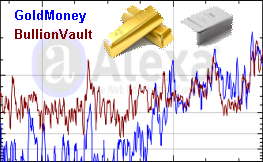
GoldMoney bar list and BullionVault client holdings. Their reviews can be found here.

Learn more about private vaulting services, including issues like ownership, custody, bailment, counter-party risks, and performance risks. 

2. Reason for not investing in physical gold & silver

The report listed 5 ways to invest in gold & silver – ETPs, Certificates, Accounts, Derivatives and physical coins & bars. Notice how it highlights & explains all the risks associated with ETPs, Certificates, Accounts and Derivatives and the reasons why it is not advisable for the Treasury to invest in these.

Notice also that there are NO risk associated with physical metals. The only reason given for not investing in coins and bars is “South Carolina does not have the capacity to store or funding to secure gold and silver bullion”.

What a lame excuse! Do they not know that in April last year, “The University of Texas Investment Management Co., the second-largest U.S. academic endowment, took delivery of almost $1 billion in gold bullion“?

-

Proviso 89.145 GP:
Gold & Silver Investments
Office of State Treasurer

-
GOLD AND SILVER AS AN INVESTMENT:

Historically, investors have purchased gold as a hedge against an economic, a political, or a currency crisis. A decline in investment markets, a growing national debt, a weak currency, increasing inflation, military conflicts and social unrest are the most common reasons for investment in gold. Currently, gold and silver are at historic highs leading many expert investors to conclude that a bubble has been created in the precious metals market. Since the US recession began, the value of gold and silver has increased as investment markets perform poorly, troublesome economic news is announced, and when uncertainty in international markets intensifies.

Similar to other commodities, the value of gold and silver is determined by supply and demand, as well as speculation. The Federal Reserve, The London Bullion Market Association, JP Morgan Chase, and HSBC Holdings have practiced fractional-reserve banking and engaged in naked short selling causing artiñcial price suppression.

There are several ways to invest in gold and silver: bars, coins, ETP’s, certificates, accounts, and derivatives. If a state were to choose to invest in gold (and silver), it would likely choose to invest by:

1. ETP’s-Exchange Traded Products. This allows the stakeholder to invest in bullion without having to store bars and coins. The ñrst gold ETF (Exchange Traded Fund) was created in 2003 and has been viewed largely as a success, but has also been compared to investing in mortgagebacked securities. The annual expenses of the fund (storage, insurance, and management fees) are charged by selling a small amount of gold represented by each certificate, so the amount of gold in each certificate will gradually decline over time. ETF’s are investment companies that are legally classified as open-end companies or Unit Investment Trusts (UIT), but differ from traditional open-end companies and U]T’s. The main differences are that ETF’s do not sell directly to investors and they issue their shares in what are called Creation Units. Also, the Creation Units may not be purchased with cash but a basket of securities that mirrors the ETF‘s portfolio. The Usually, the Creation Units are split up and re-sold on a secondary market.

2. Certificates- allow investors to avoid the risks and costs associated with the transfer and storage of bullion by taking on a set of risks and costs associated with the certificate itself. Banks may issue gold certificates for gold which is allocated (non-fungible) or unallocated (fungible). Unallocated gold certiñcates are a form of fractional reserve banking and do not guarantee an equal exchange for metal in the event of a run on the bank’s gold on deposit. Allocated gold certificates should be correlated with speciñc numbered bars, however it is difficult to prove whether a bank is improperly allocating a single bar to more than one investor. The US ñrst authorized the use of gold certificates in 1863. By the early l930’s the US placed restrictions on private gold ownership and therefore, the gold certificates stopped circulating as money, but certificates are still issued by gold pool programs for investment purposes.

3. Accounts- Many banks offer gold accounts where gold can be instantly bought or sold just like any foreign currency on a fractional reserve (non-allocated, fungible) basis. Pool accounts, facilitate highly liquid, but unallocated claims on gold owned by the company. Digital gold currency systems operate like pool accounts and additionally allow the direct transfer of fungible gold between members of the service. Different accounts impose varying types of intermediation between the client and their gold. One of the most important differences between accounts is whether the gold is held on an allocated or unallocated basis. Another major difference is the strength of the account holder’s claim on the gold, in the event that the account administrator faces gold-denominated liabilities, asset forfeiture, or bankruptcy.

4. Derivatives- The product symbol for gold futures is GC, and it is traded in a standard contract
size of 100 troy ounces. In the US, gold futures are primarily traded on the New York Commodities Exchange (COMEX). As of 2009 holders of COMEX gold futures have experienced problems taking delivery of their metal. Along with chronic delivery delays, some investors have received delivery of bars not matching their contract in serial number and weight. Because of these problems, there are concerns that COMEX may not have the gold inventory to back its existing warehouse receipts.

ADVISABILITY:
There is no statute preventing the State from investing in gold and silver. The various methods of investment in gold and silver each carry different and often significant risks, the foremost being speculation. As the US has experienced the recent bursts in the housing and tech bubbles, it is important to take caution when contemplating an unconventional investment. Taxpayer money (state funds and state pension) across the US has not typically been used to invest in gold or silver bullion.

Recently, with the uncertainty in global markets, the devaluation of the dollar, rising inflation, and a flat US economy, there has been a renewed interest in either moving back to a gold standard, investing in gold or both. The value of gold and silver has significantly increased in the last decade, meaning it would cost a great deal to invest at this time.

Risks:
1. Bars and coins- South Carolina does not have the capacity to store or funding to secure gold and silver bullion. For these reasons the State Treasurer’s Office does not advise investing in gold and silver bars and coins.

2. ETP’s- The armual expenses and costs associated with this type of investment are high. In recent years there have been issues surrounding gold ETP’s. The purchase price provides the investor with a fluctuating amount (in weight) of the metal. Over time, as value increases and more investors participate in the fund, the amount of metal owner by the investor decreases. ETP’s can also be split and sold on the secondary market. For these reasons the State Treasurer’s Ofñce does not advise investing in ETP’s for gold and silver.

3. Certificates- Certificates for allocated gold present an accountability problem. Allocated gold certificates are supposed to be correlated with speciñc numbered bars; however, it is difficult to verify whether a bank is improperly allocating a single bar to more than one investor. Also, unallocated gold certificates are a form of fractional reserve banking and do not guarantee an equal exchange for metal in the event of a run on the bank’s gold on deposit. This is in conflict with S.C. Code of Laws 1976 SECTION 11-9-660. For these reasons, the State Treasurer’s Office cannot advise investing in gold and silver certificates.

4. Accounts- Similar to the risks associated with gold and silver certificates, allocated and unallocated metals held in accounts produce similar accountability problems. The strength of the account holder’s claim on metals is subject to the account administrators liabilities, assets, and/or solvency. Per S.C. Code of Laws 1976 SECTION 11-9-660, the State Treasurer’s Office cannot advise investing in gold and silver accounts.

5. Derivatives- Over the last three years, gold futures traded on the New York Commodities Exchange (COMEX) have encountered significant accountability problems. Holders of COMEX gold ñltures have frequently experienced delivery delays of their metals. Once delivered, there have been many reports of inaccurate weights and serial numbers on bars that do not match the holder’s contract. For these reasons the State Treasurer’s Office does not advise investing in gold and silver derivatives.

-

April 2012 God & Silver Smash

Gold: April 2012

-

Having read the above, it may now be easier to make sense of the sharp price decline for both gold & silver over the past 2 days. Lets now ask some questions. Was the price action due to:

  • Market forces or Price Suppression in action?
  • Falling Demand or Naked Short Selling?
  • Human Traders or High Frequency Traders (HFTs)?
Historically, investors have purchased gold as a hedge against an economic, a political, or a currency crisis. A decline in investment markets, a growing national debt, a weak currency, increasing inflation, military conflicts and social unrest are the most common reasons for investment in gold
Have any of the issues above that formed the rationale for purchasing gold (and silver) been resolved?
Recently, with the uncertainty in global markets, the devaluation of the dollar, rising inflation, and a flat US economy, there has been a renewed interest in either moving back to a gold standard, investing in gold or both.

The mainstream media attributed this week’s sharp price decline to  improving economy, low inflation and no imminent QE announcements following the release of the latest FOMC meeting minutes. Given that the above statement was published just 5 weeks before the FOMC minutes, who is lying?

-

Developing Stories

12 Apr:
Jason Hommel explains what Blythe Masters actually meant by “the underlying client position that we’re hedging”.

11 Apr:
Ted Butler, the pioneer of silver manipulation investigation finally broke his silence over the Blythe Masters denial video clip. By far, this is THE best, most level-headed, objective rebuttal to Masters’ famous words that they are “not running a large directional position”. Read “JPM’s TV appearance” posted at Silverseek.com.

10 Apr: 

-

7 Apr:
Mike Maloney on RT discussing gold & silver manipulation, Blythe Masters denial of JPM’s role in price manipulation, “First government admission of price suppression” & High Frequency Sheering. Must Watch!

-

6 Apr: 

Further Reading:

-

The Greatest Risk for Gold Investors

November 3, 2011 Leave a comment

By Jeff Clark | BIG GOLD

While we’re convinced that our gold and silver investments will pay off, they don’t come without risk. What do you suppose is the biggest risk we face? Another 2008-style selloff? Gold stocks never breaking out of their funk? Maybe a depression that slams our standard of living?

Though those things are possible, we at Casey Research don’t see that as your greatest threat:

“Your biggest risk is not that gold or silver may fall in price. Nor is it that gold stocks could take longer to catch fire than we think. Not even the prospect of the Greater Depression. No, your biggest risk is political. As bankrupt governments get increasingly desperate for revenue, any monetary asset held domestically could be a target. It is absolutely essential that every investor diversify themselves politically. In fact, at this point, it is the one action that should be taken before anything else.” – Doug Casey, September 2011

I know many reading this are prudent investors. You own gold and silver as solid protection against currency debasement, inflation, and faltering economies. You set aside cash for emergencies. You have strong exposure to gold stocks, both producers and juniors, positioned ahead of what is likely the next-favored asset class. You feel protected and poised to profit.

Yet, despite all this preparation, you remain exposed to one of the biggest risks.

Similar to holding a diversified portfolio at a bank without checking the institutions solvency, many investors keep their entire stash of precious metals inside one political system without considering the potential trap theyve set for themselves. While storing some of your gold outside your home country is not a panacea, it does offer one important thing: another layer of protection.

Consider the exposure of the typical US investor:

  1. systemic risk, because both the bank and broker are US domiciled
  2. currency risk, as virtually every transaction is made in US dollars
  3. political risk, because they are left totally exposed to the whims of a single government
  4. economic risk, by being vulnerable to the breakdown of a single economy

Viewed in this context, the average US investor has minimal diversification.

The remedy is to internationalize the storage of some of your precious metals. This act reduces four primary risks:

Confiscation: We dont know the likelihood of another gold confiscation. But we do know that things are working against us – particularly for US citizens. With $14.7 trillion of debt and $115 trillion of unfunded liabilities, the US government will likely pursue heavy-handed solutions. Under the 1933 FDR “gold confiscation” in the US (the executive order was actually a forced delivery of citizensgold in exchange for cash), foreign-held gold was exempted.

Capital Controls: Many Casey editors think some form of capital controls lie ahead, limiting or eliminating a citizens ability to carry or send money abroad. If enacted, all your capital would be trapped inside the US and at the mercy of whatever taxing and regulating schemes the government might concoct. Although you might be able to leave the country, your assets could not travel with you.

Administrative Action: There are plenty of horror stories of asset seizure by a government agency without any notice or due process, possibly leaving the victim without the means to mount a legal defense. Having some gold or silver stored elsewhere provides what could be your only available source of funds in such a scenario.

Lack of Personal Control: Having gold and silver stored elsewhere adds to your options. You will have a source of funds available for business, entrepreneurial pursuits, investment, or pleasure.

Foreign-held assets also require greater awareness and planning:Notice above we said these risks can be reduced, not eliminated. There is no perfect solution; US persons could, for example, be compelled to pay a “wealth tax” on assets held worldwide, or even repatriate them in a worst-case scenario. Absent a crystal ball, the political diversity of asset location is an essential strategy against an uncertain future.

  1. Access to your metal or sale proceeds may not be quick. Therefore, this option is for those with some gold and silver stored at or near home. We do not recommend storing all your precious metals overseas; that defeats one of its purposes, to have it handy for an emergency.
  2. While we think the US poses the greatest threat, a foreign government could move to control certain assets as well. The risk varies by country and is generally greater within the banking system than with private vaulting facilities.
  3. Understanding and complying with reporting requirements is essential.

The bottom line, though, is that foreign-held precious metals can mitigate risk and give you more options. And as your metal holdings grows, diversification becomes more crucial.

Given our current rapacious climate, its likely that simply buying gold wont be enough. We strongly suggest every investor diversify one‘s bullion storage outside their current political regime. The option may not be available someday, leaving you vulnerable without a secondary source of bullion.

We advise taking advantage of the opportunity before it is gone.

[One way to internationalize your bullion is to use a safe deposit box in a second country; however, this requires traveling to the institution to handle the paperwork and organizing the transport of your bullion... and the contents of a safe deposit box aren't insured. Other programs will store gold; but the metal is often held in the form of fractional ownership in a 400-oz. bar and not specific coins and bars held in your name. A better solution is to store your bullion in a non-bank depository, outside your home country, without shared ownership, and do it for a reasonable fee. We found a program that provides all those things; and it offers BIG GOLD readers six months' free gold and silver storage in a Canadian vault. A risk-free, three-month trial subscription to BIG GOLD will qualify you for that deal... plus all the expert analysis and actionable investment advice packed into each issue.]

Related Articles:


A New Bank Backed By Gold In The Making

October 18, 2011 6 comments

Eric SprottEric Sprott, one of the most vocal critics of the global financial system, wants to start a bank. But it won’t be like any bank most people are used to seeing.

Mr. Sprott and the asset management firm he founded, Sprott Inc. (SII-T), are investing in an Ontario-based currency trading company known as Continental Currency Exchange Corp. They, along with the current management of Continental, are applying to federal regulators for permission to turn the 17-branch operation into the Continental Bank of Canada. They expect to get a decision early next year.

The bank Mr. Sprott and his partners envisage would seek to address all the things that Mr. Sprott has warned against in the global financial system, such as too much leverage and a lack of confidence in paper currency.

Continental Bank would take deposits, but it would make no loans, unlike most current banks that are built on a model of lending out far more money than they actually have on hand.

Taking it a step further, customers who don’t trust government-issued currency may some day be able to keep their deposits in the form of gold and other precious metals that they could tap for everyday purchases. That idea is in keeping with Mr. Sprott’s musings about chequing accounts backed by precious metals – customers could deposit gold, then make purchases by cheque and have their accounts debited accordingly.

“Our firm, Sprott Inc., and Eric have taken a very committed view that the financial system requires a substantial reset,” Sprott Inc. chief executive officer Peter Grosskopf said in an interview. Given that, “Eric has always thought that offering consumers access to an unlevered bank is a good idea,” he said.

In a levered financial system, relatively small losses by banks on their loans and investments can push a bank close to collapse. This bank would have no leverage and instead would make money thanks to profit margins on services such as selling foreign exchange and precious metals.

“It’s the old commerce model of providing service instead of credit,” said Scott Penfound, vice-president of operations at Continental Currency.

Mr. Penfound will stay on to manage the business and he and his family will continue to own 49 per cent of the company. Mr. Sprott and Sprott Inc. would together control 51 per cent of the bank, with Mr. Sprott having the larger share. Sprott Inc.’s stake would be a passive one, Mr. Grosskopf said.

Fear of financial system meltdown and a loss of value in paper currency as central banks print more and more money drove gold to record highs approaching $2,000 (U.S.) an ounce before last week’s big selloff in financial and commodity markets.

Much of the buying has been driven by people who share Mr. Sprott’s concerns about the financial system and who believe that some day gold and silver may once again be the foundation of commerce. Mr. Sprott wrote in a July commentary that he believes that “gold and silver are the ultimate alternative for a chequing account in a vulnerable banking jurisdiction.”

One of the criticisms of gold as an alternative to paper currency has always been that it is not very practical. Secure storage is an issue, and it is not easy to take a few ounces to the store to buy groceries or to pay for the dry cleaning.

Being able to write a cheque against an account at an institution that actually holds physical gold or silver brings the idea of precious metals as an everyday currency closer to reality.

To be sure, the gold-based banking idea is a long-term goal. For Continental, having a stamp of approval from regulators will set it apart from other companies operating in the foreign exchange and metal sales businesses, Mr. Penfound said. The company will also have more capital, thanks to the new investors, to expand and to deal with regulatory requirements.

Another more immediate benefit of a banking licence is access to the interbank foreign exchange trading system, which would allow Continental to offer more services to customers, Mr. Grosskopf said.

For example, instead of simply offering to exchange Canadian dollars for foreign currency at its branches around Ontario, Continental could sell its clients pre-paid currency cards that they could take when travelling to foreign countries.

“We can sleep at night because risk is not something in the model,” Mr. Penfound said.

Source

Categories: News Tags: ,
Follow

Get every new post delivered to your Inbox.

Join 175 other followers